


Most of the enterprises have a similar GenAI story - a senior exec sees a demo on Twitter and declares “we need this for our business.” A team builds a prototype in two weeks that looks incredible.
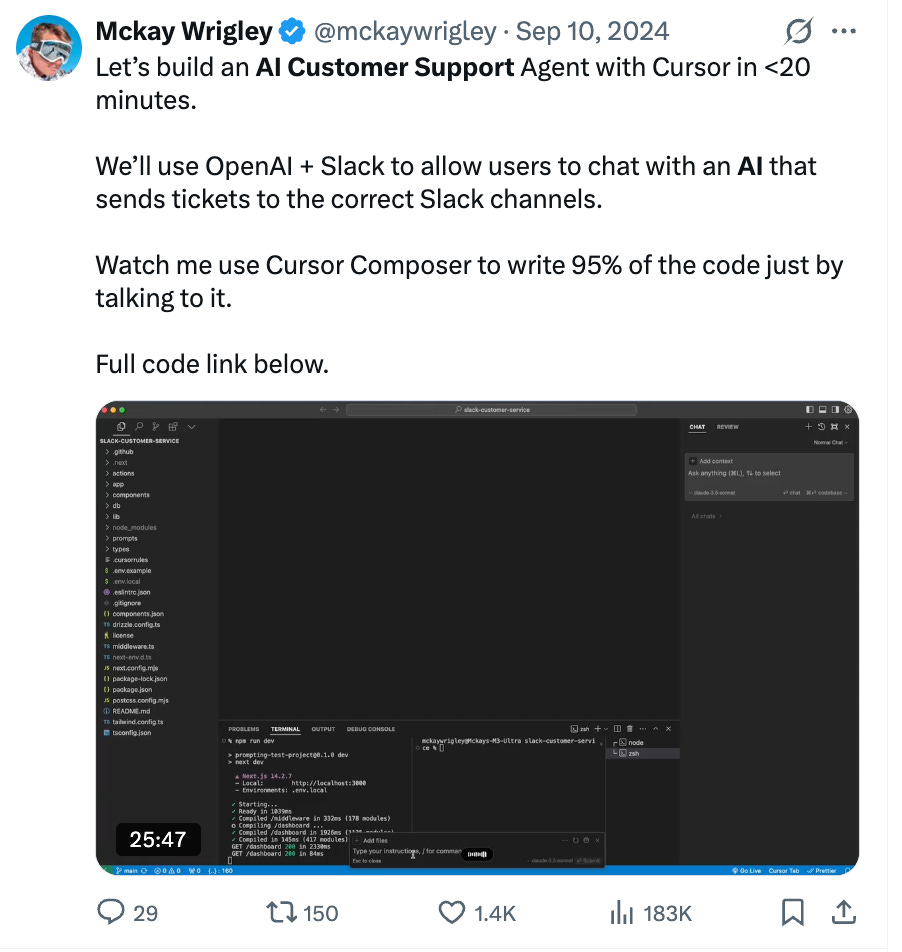
Three months later, it’s still not in production. The team is firefighting issues nobody anticipated, and the business is wondering why this “simple” AI project which was live on Twitter in a week consumed so much time.
GenAI models are powerful, but they know nothing about your business. They don’t know your products, customers, processes, or institutional knowledge. That information has to be found, organized, kept current, and delivered to the AI at exactly the right moment.
This is the knowledge layer problem. And it’s the #1 reason production deployments take longer than anyone expects.
The pattern is familiar across enterprise technology. New capabilities arrive with impressive demos. Then teams discover the real work is in integration, data, and processes - not the technology itself.
The technology always works. The integration work is where teams spend their time.
We’ve seen this movie before, haven’t we?
There’s a pattern in technology that keeps repeating - a powerful new capability arrives and early demos are magical. Then reality sets in, and the bottleneck turns out to be something unglamorous that has nothing to do with the technology itself.
The internet democratized information but we got more confusion alongside more access. Cloud computing made servers trivial to provision but companies found their AWS bills spiraling and systems just as complex as before.
GenAI is following this exact path. The models are incredible. Using them in production requires solving a massive knowledge management problem that most companies didn’t know they had.
We’re calling this “AI deployment” but the AI is actually the easiest part. What we’re really doing is confronting decades of poor knowledge management. The AI just makes the problem impossible to ignore.
The five knowledge layer problems breaking GenAI
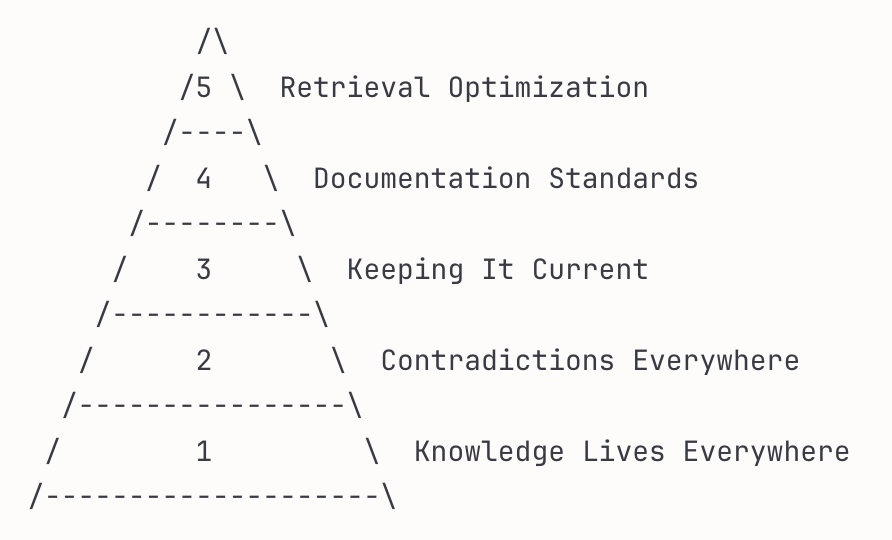
(1) your knowledge lives everywhere (and nowhere)
Companies look at their documentation and think “Oh, the knowledge problem is solved. We have Confluence, CRM, support tickets. Just point the AI at it”.
This is like looking at books thrown across different buildings with no catalog system and thinking you have an organized library.
What usually ends up happening is that the Product documentation in confluence hasn’t been updated since the last release eight months ago, latest features exist only in Jira tickets and Slack channels.
Sales methodology is scattered across google drive with 47 folders. Files named “Sales Playbook Final v3” and “Final ACTUALLY FINAL.” Nobody knows which is current. Different regions have contradicting versions.
Customer success processes are in Notion. But the real knowledge - the workarounds that work - lives in Slack.
“Ignore the official process, here’s what you actually do.”
Pricing is in spreadsheets by region. Special exceptions in email threads. Enterprise deals have custom terms in PDfs in someone’s drive.
Marketing campaign performance is split between google analytics, hubspot, salesforce, and that custom tableau or looker dashboard. Campaign strategies? Buried in quarterly review slides nobody looks at again.
Legal policies are in sharepoint or confluence behind access controls. Product roadmap exists in four places with four different versions.
Your GenAI needs all of this to answer one question. But first you need to connect 15 systems with different APIs and authentication, figure out what’s current, resolve conflicts, and handle the fact that half these systems don’t have APIs.
You spend three months getting access. Three more building connectors. Then you discover the real knowledge isn’t in any system - it’s in people’s heads and slack conversations.
(2) when you do find it, it contradicts itself
Product marketing says you integrate with “all major CRM systems.” Technical docs list salesforce, hubspot, pipedrive. Sales materials say “salesforce and others.” A case study mentions custom dynamics integration as well.
Which version should your AI tell customers?
Your return policy says 30 days on the website. Support knowledge base says 30 for standard, 90 for enterprise. An internal memo extended it to 60 for a promotion that maybe ended. Customer success tells people 45 days as compromise.
These contradictions exist everywhere. Policies change faster than documentation. Different teams optimize for different things. Special cases create exceptions never properly codified.
Humans navigate this through judgment and knowing who to ask. Your AI sees conflicting sources and guesses. The AI isn't always hallucinating - it's accurately reporting the conflicting mess you've been papering over with “just ask Sarah” for three years.
Most companies don’t have knowledge; they have information. Knowledge implies organization and a single source of truth. What they have is a pile of information with no systematic way to separate signal from noise. So, every company thinks their knowledge problem is “we need better search.” The real problem is you're searching through garbage.
Building a knowledge layer means someone makes hard decisions about what’s true and authoritative. This isn’t technical. It’s organizational - confronting how poorly managed your information actually is.
(3) keeping it current is harder than building it
Let’s say you do turn brave and manage to clean up contradictions, create one authoritative knowledge base, and now everything is consistent and up to date.
It’s out of date in a week.
Product launches a feature → pricing changes → legal updates a policy → you close a deal with special terms support needs to know.
There’s no pull request for “update the AI’s understanding of our pricing.” No automated test to verify the knowledge base reflects reality. No deployment pipeline.
Instead, someone is supposed to remember to update confluence, training materials, support knowledge base, tell the AI team, update sales decks, and notify everyone. Except they’re busy. They forget. Or update one place but not others.
The product team launches a feature and updates their docs. They don’t tell the AI team. Two months later, a customer asks your AI about it. The AI says it doesn’t exist. The customer emails support saying your AI is useless.
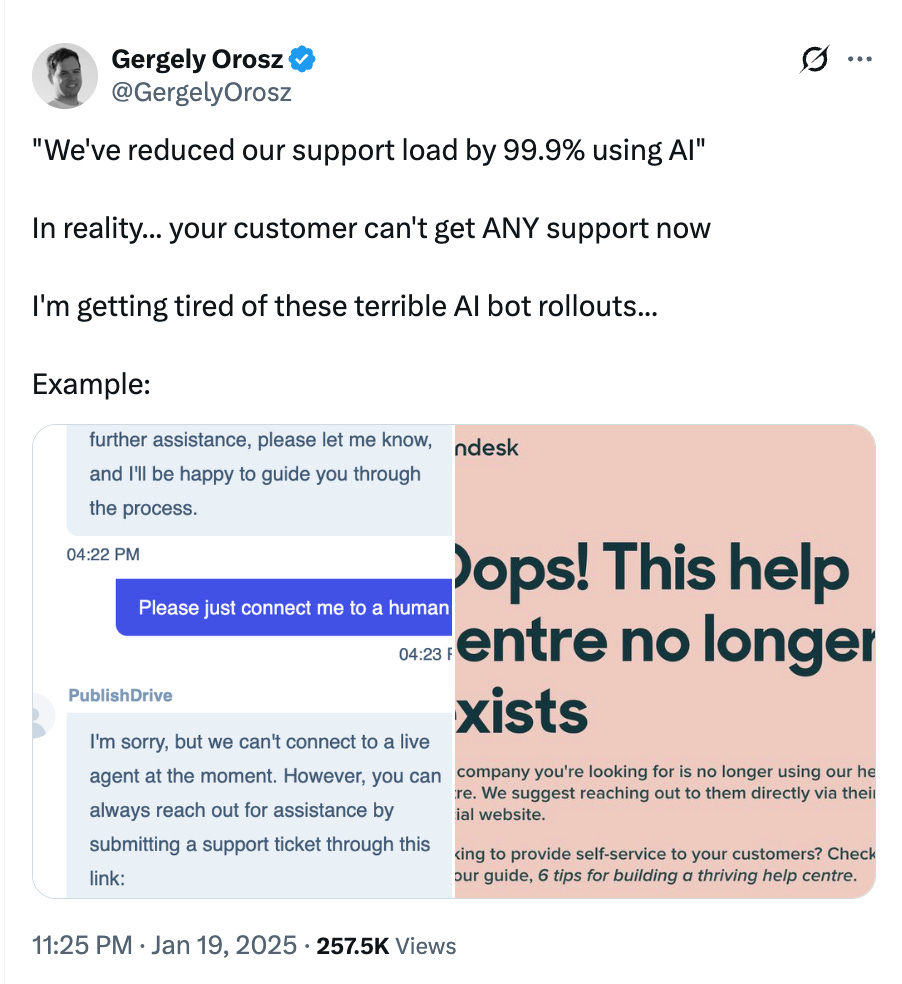
Or marketing runs a promotion changing pricing, updates the website, but forgets the knowledge base. Your AI quotes old pricing to prospects for three weeks.
This happens constantly. The knowledge layer degrades daily as business evolves faster than documentation.
By the time, teams reach stage 3 (if they do reach this stage), they realize that keeping a knowledge layer current is harder than building it. It requires processes, ownership, and ongoing maintenance. Most companies are terrible at this even without AI.
(4) different teams have different documentation standards
Engineering documents well. They have to. Code breaks if documentation doesn’t match. They use git, track changes, write specs, and all the other good stuff.
Sales and marketing are the opposite. And this is where customer-facing AI struggles the most with information.
Marketing launches campaigns constantly. Where’s the documentation of what worked? Scattered across post-mortem slides looked at once. Campaign briefs in one place, creative assets elsewhere, performance data in a third system, strategic reasoning nowhere.
Sales is not much better (umm, sorry my friends). Deal info is in salesforce but incomplete. Reps log the minimum required. The real information - why deals were won or lost - is in their heads or email threads not connected to CRM yet.
You want your AI to suggest sales strategies based on similar deals? The information doesn’t exist in consumable form. You have data points - deal size, industry, timeline. Not the story - what customers cared about, what objections arose, what messaging resonated. It’s easy to get that info but integrating is hard. Maintaining that integration is harder.
In the past a lot of teams got away with not documenting because they work through relationships and conversations. Engineering can’t because code either works or doesn’t. Sales and marketing could because success is fuzzier and knowledge is personal.
GenAI is forcing these teams to document things they never had to. They’re discovering it’s incredibly hard to retroactively capture years of institutional knowledge that only exists in heads.
(5) retrieval is a really hard optimisation problem
Even if your knowledge is centralized, consistent, current, and comprehensive - you still have retrieval.
Your knowledge base has 10,000+ documents. Someone asks: “What’s our refund policy for enterprise customers in europe?”
Your system must understand what they’re really asking, identify “enterprise” means specific customer segments, recognize “Europe” might have regional requirements, search 10,000 documents, find the right policy (not consumer returns, not general terms), find the section on geographical variations, check for recent updates, rank by relevance, assemble into context within token limits, and hope it’s right.
This fails constantly:
You retrieve a pricing document mentioning refunds in passing. It matches search terms but isn’t about refunds. The AI uses it and gives incomplete answers.
You miss the actual policy titled “Customer success remediation guidelines” that doesn’t say “refund” prominently.
You get the right document but wrong section - the policy differs for hardware vs software. The question didn’t specify.
You retrieve too much context and hit token limits. You drop the section about european requirements because it seemed less relevant, but that was the key part.
The policy was updated three months ago but the old version remains. Your retrieval finds both. The AI picks wrong.
Companies spend months tuning retrieval - trying different embedding models, adjusting ranking algorithms, experimenting with chunking strategies. You fix retrieval for one question type and break it for another. The issue is that you can't patch institutional knowledge debt with a better embedding model. This is like trying to fix a hoarder's house with a better filing system.
And what nobody talks about is that even with perfect retrieval, you’re constrained by context windows. This is definitely getting better but you’re always going to be trading off (at least for next 12-18 months) comprehensive context against some form of constraints (context, pricing limits etc.)
Intelligence without knowledge is just expensive guessing
Understanding this truly takes lots of doing the AI deployments in enterprises 👇:
Human expertise is valuable because humans compressed years of knowledge into intuition. They don’t retrieve documentation to answer questions all the time. They just know.
AI doesn’t work that way computationally - every answer needs explicit context retrieved fresh. No traditional human form of intuition, no compression, no shortcuts. Intelligence without internalized knowledge is inherently expensive and fragile.
Every interaction made without hardwired knowledge costs money - not just the API call, but the entire context assembly as well. Search your vector database - compute cost. Retrieve documents - storage and processing. Rank and filter - more compute. Assemble into context - 5k tokens before the AI thinks.
That $500 pilot becomes $15,000 monthly at scale. The context tax is real and unavoidable.
Knowledge is also political
Deciding what goes in the knowledge layer is also political. Sales wants competitive positioning emphasized. Legal wants compliance disclaimers. Marketing wants brand consistency. Customer success wants accurate timelines over optimistic ones.
When marketing says you “work with all major platforms” and engineering says “we support these three integrations,” which is authoritative?
The dirty secret is that companies don’t have a single source of truth because different groups benefit from ambiguity. Sales can promise features “on the roadmap” without committing. Marketing can claim capabilities that technically exist but aren’t production-ready. The reason sales doesn't document is the same reason they'll resist AI: the ambiguity is a feature, not a bug. Pinning things down reduces flexibility.
Making this explicit forces conversations organizations avoided for years. The AI project stalls not from technical problems but because nobody wants to resolve underlying ambiguity.
So how are some companies making it work so far?
Companies succeeding aren’t boiling the ocean but rather picking very narrow domains where knowledge is manageable. Instead of “answer any question,” they start with “help sales reps with pricing questions.” The knowledge layer for pricing is finite - 50 documents that change quarterly. They can keep this current.
They’re realistic about accuracy, build human review for important decisions and accept the AI will sometimes be wrong and design workflows that catch or mitigate errors.
They (and the leaders in the company) invest as much in knowledge management as AI, create ownership for the knowledge base, build update processes and treat documentation as a product requiring ongoing investment.
Most importantly, they stop calling it an AI project. They call it what it is: a knowledge management project that happens to use AI.
GenAI deployment is exposing what companies ignored for years: terrible knowledge management. Information scattered across incompatible systems. Documentation contradicting itself. Nobody knowing what’s current. Critical knowledge only in people’s heads.
This was always a problem. You got away with it because humans navigate ambiguity through relationships. AI can’t. It needs explicit, structured, current, consistent information.
GenAI is forcing companies to confront their knowledge management debt. The bill is higher than anyone expected. The demos work because oftentimes they use curated information in controlled settings. Production fails because reality is messy and nobody solved the underlying knowledge problem. We’re not in an AI deployment crisis. We’re in a knowledge management crisis that AI made impossible to ignore.
i have said this before as well - companies that succeed won’t have the best models or biggest budgets. They’ll be the ones that finally do the unglamorous work of organizing and maintaining their institutional knowledge.
The AI is the easy part. Everything else is hard.